

LED Selection Guide
Expert guidance for choosing the right LED solution. From automotive lighting to biomedical applications, find the perfect match for your technical requirements and performance goals.
How to Select the Right LED
Follow our systematic approach to identify the optimal LED solution based on your specific requirements.
Define Requirements
Identify application needs, environmental conditions, operating parameters, and certification requirements.
Technical Specifications
Determine luminous flux, color temperature, CRI, beam angle, power consumption, and thermal requirements.
Package Selection
Choose appropriate package type based on size constraints, thermal management needs, and assembly method.
Validation & Testing
Review datasheets, request samples, and conduct performance testing under actual operating conditions.
LED Package Types
Compare different LED packages based on performance characteristics and application suitability.
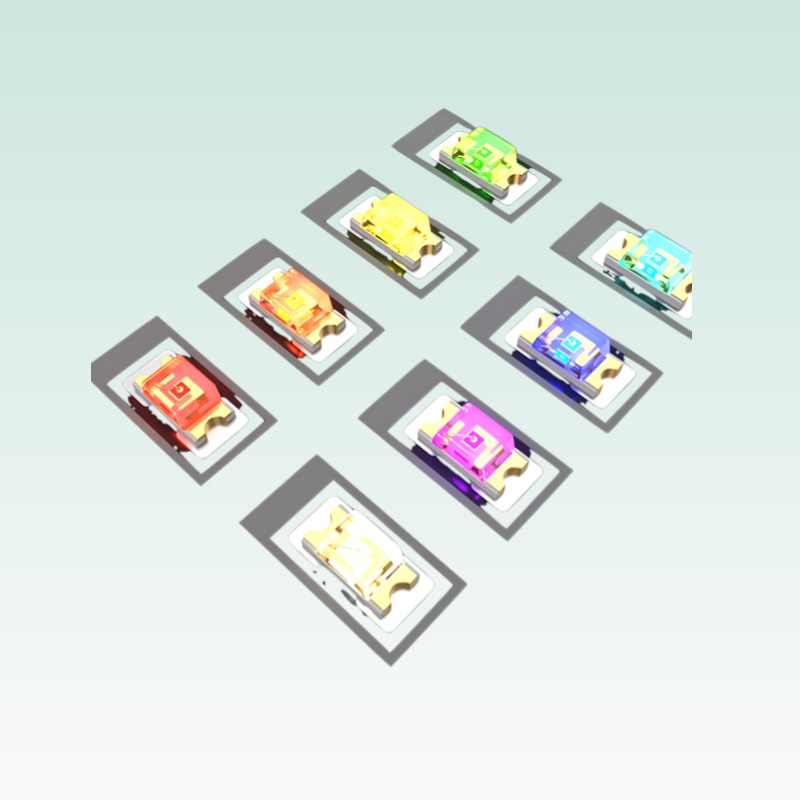
SMD LEDs
Typical Sizes
2835, 3030, 3528, 5050
2835, 3030, 3528, 5050
Power Range
0.1W – 3W per chip
0.1W – 3W per chip
Thermal Management
PCB heat sinking required
PCB heat sinking required
Best For:
Backlighting, general illumination, decorative lighting, consumer electronics where space is limited.
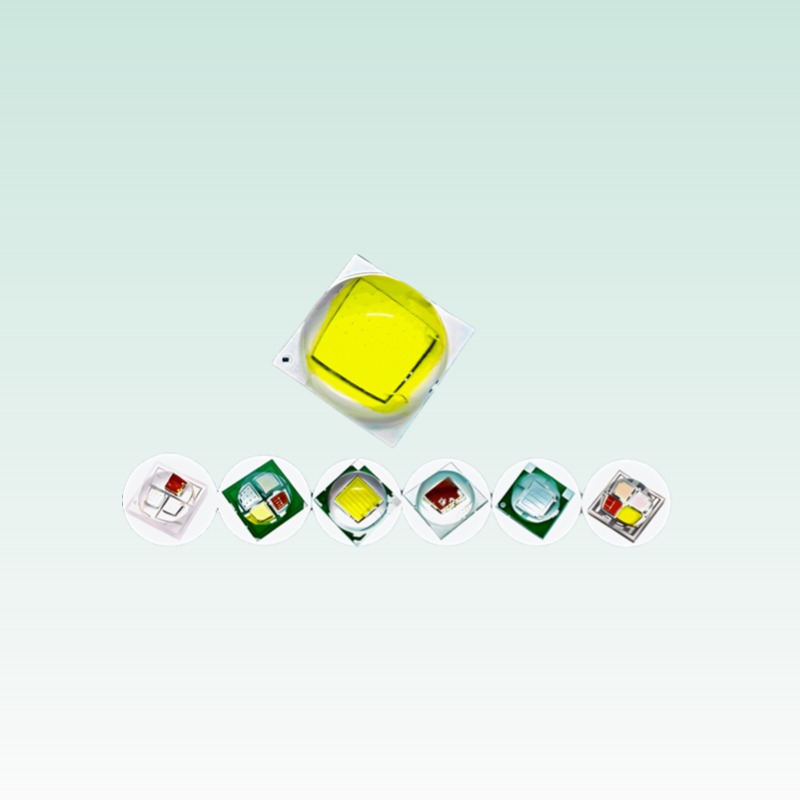
COB LEDs
Chip Configuration
Multiple chips on single substrate
Multiple chips on single substrate
Power Range
5W – 200W+
5W – 200W+
Thermal Management
Active cooling required
Active cooling required
Best For:
High-brightness applications, spot lighting, downlights, track lighting requiring uniform illumination.
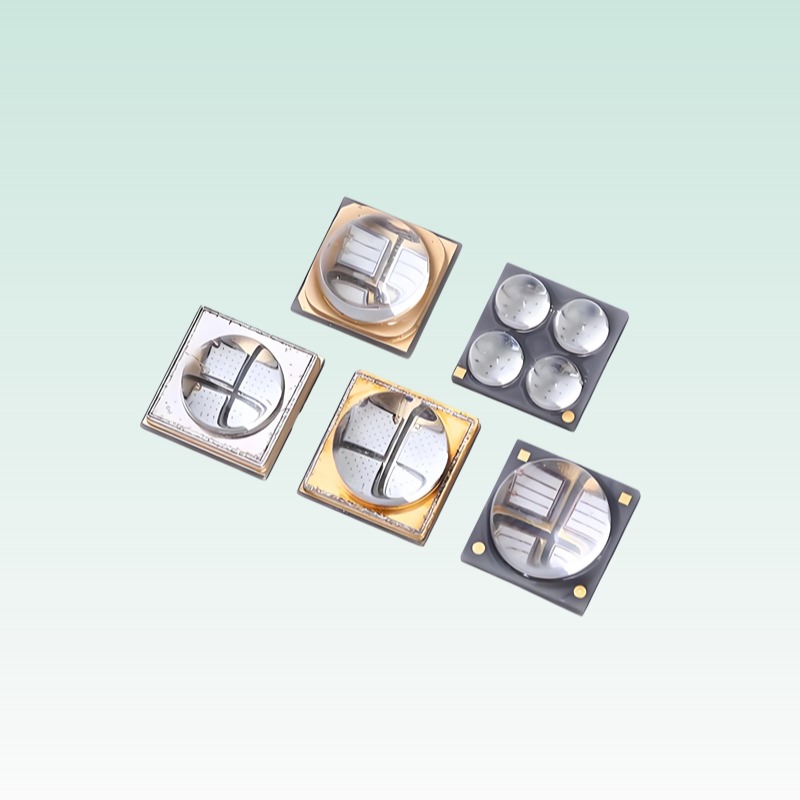
High Power LEDs
Package Types
3535, 5050, 7070 ceramic
3535, 5050, 7070 ceramic
Current Rating
350mA – 3A+
350mA – 3A+
Thermal Management
Heatsink required
Heatsink required
Best For:
Automotive headlights, industrial lighting, UV curing, applications requiring high flux density and reliability.
Technical Parameter Comparison
Detailed comparison of key performance parameters across different LED technologies.
| Parameter | SMD LED | COB LED | High Power LED |
|---|---|---|---|
| Luminous Efficacy (lm/W) | 120-180 | 100-160 | 130-200 |
| Thermal Resistance (°C/W) | 10-25 | 1-5 | 2-8 |
| Maximum Junction Temperature | 125°C | 150°C | 150°C |
| CRI Range | 70-95+ | 80-95+ | 70-95+ |
| Color Consistency | |||
| Typical Lifetime (L70) | 25,000-50,000 hrs | 30,000-50,000 hrs | 50,000-100,000 hrs |
Select by Application
Choose your application to see recommended LED solutions and technical considerations.
Automotive Lighting Solutions
High-reliability LEDs for exterior and interior automotive applications
Headlights & DRLs
Recommended: High-power ceramic LEDs (3535, 5050 package)
Key Requirements: High flux density, thermal stability
Typical Luminous Flux: 1000-2000 lm @ 350mA
Signal Lights
Recommended: High-brightness SMD LEDs
Key Requirements: Fast response time
Color Options: Red, Amber, White
Interior Lighting
Recommended: SMD LEDs with high CRI
Key Requirements: Low profile, uniform illumination
Typical CRI: >80 for general applications
Medical & Biomedical Solutions
Precision LEDs for diagnostic, therapeutic, and surgical applications
Surgical Lighting
Recommended: High CRI COB LEDs
Key Requirements: CRI >95, shadow reduction
Typical Color Temp: 4000K-5000K
Phototherapy
Recommended: High-power narrow spectrum LEDs
Key Requirements: Precise wavelength control
Common Wavelengths: 415nm, 450nm, 630nm
Diagnostic Equipment
Recommended: SMD LEDs with tight binning
Key Requirements: Stable output, minimal drift
Certifications: ISO 13485 compliance
Display & Signage Solutions
High-density, color-accurate LEDs for visual display applications
Video Walls
Recommended: High-density SMD LEDs
Key Requirements: Uniform brightness, wide viewing angle
Pixel Pitch: 0.9mm – 10mm depending on application
Architectural Lighting
Recommended: RGBW LED modules
Key Requirements: Color mixing, dimming control
Control Protocols: DMX, DALI, wireless options
Retail Displays
Recommended: High CRI LED strips
Key Requirements: Color accuracy, flexibility
Typical CRI: >90 for product showcasing
Industrial Lighting Solutions
Rugged, high-performance LEDs for industrial and commercial applications
Factory Lighting
Recommended: High-power LED fixtures
Key Requirements: High efficacy, long lifetime
Typical Efficacy: 150-200 lm/W
UV Curing
Recommended: UV LED arrays
Key Requirements: High irradiance, stable output
Wavelengths: 365nm, 385nm, 395nm, 405nm
Machine Vision
Recommended: Structured light LEDs
Key Requirements: Uniform illumination, flicker-free
Typical Power: 10W – 100W arrays
Technical Support & Resources
Access comprehensive technical documentation, simulation tools, and engineering support for successful LED integration.
Download Datasheets
Application Notes
Performance Data
Engineering Support
 English
 Afrikaans
 Albanian
 Amharic
 Arabic
 Armenian
 Azerbaijani
 Basque
 Belarusian
 Bengali
 Bosnian
 Bulgarian
 Catalan
 Cebuano
 Chichewa
 Corsican
 Croatian
 Czech
Czech Danish
 Dutch
Dutch Esperanto
 Estonian
 Filipino
 Finnish
 French
 Frisian
 Galician
 Georgian
 German
 Greek
Greek Gujarati
 Haitian Creole
 Hausa
Hausa Hawaiian
 Hebrew
 Hindi
Hindi Hmong
Hmong Hungarian
 Icelandic
 Igbo
Igbo Indonesian
 Irish
Irish Italian
 Japanese
 Javanese
 Kannada
 Kazakh
 Khmer
Khmer Korean
 Kurdish (Kurmanji)
 Kyrgyz
 Lao
Lao Latin
Latin Latvian
 Lithuanian
 Luxembourgish
 Macedonian
 Malagasy
 Malay
Malay Malayalam
 Maltese
 Maori
Maori Marathi
 Mongolian
 Myanmar (Burmese)
 Nepali
 Norwegian
 Pashto
 Persian
 Polish
 Portuguese
 Punjabi
 Romanian
 Russian
 Samoan
 Scottish Gaelic
 Serbian
 Sesotho
 Shona
Shona Sindhi
 Sinhala
 Slovak
 Slovenian
 Somali
 Spanish
 Sudanese
 Swahili
 Swedish
 Tajik
Tajik Tamil
Tamil Telugu
 Thai
Thai Turkish
 Ukrainian
 Urdu
Urdu Uzbek
Uzbek Vietnamese
 Welsh
Welsh Xhosa
Xhosa Yiddish
 Yoruba
 Zulu
Zulu