







SMD LED Failure Analysis & Process Fixes
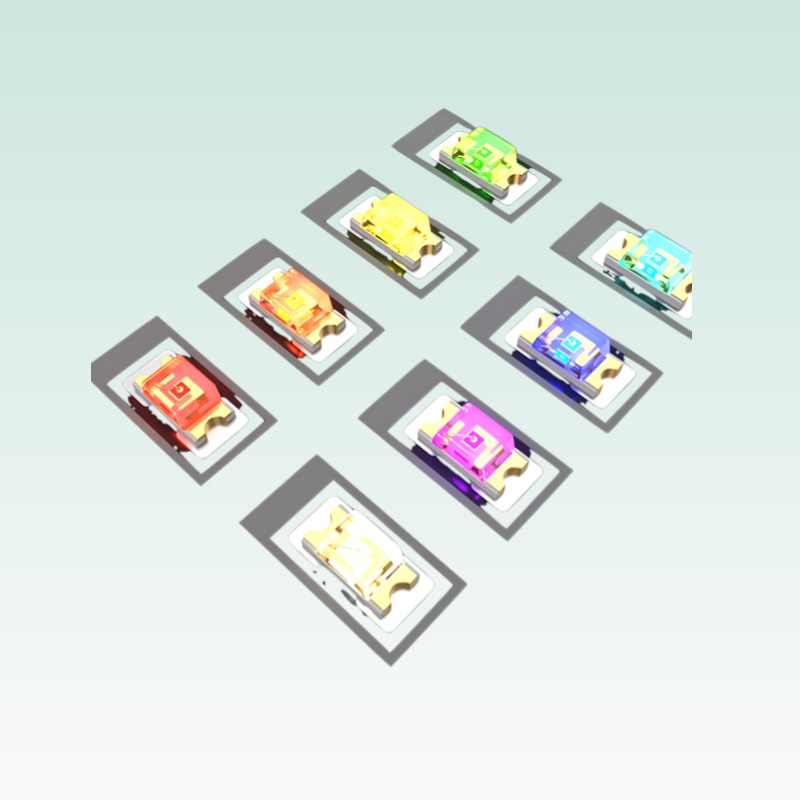
This guide addresses root causes in SMT production and field operation. Focus: 0603, 0805, 1206, 2835, 3528, 5050 packages.
| Symptom | Root Cause | Diagnostic Method | Corrective Action |
|---|---|---|---|
| LED not lighting after reflow | Tombstoning (chip standing up), solder voiding, open circuit | AOI inspection; X-ray for voids; continuity test with multimeter | Optimize stencil aperture ratio (≥0.66); adjust reflow peak to 240–250°C; reduce pad asymmetry |
| Intermittent flicker or dim output | Micro-crack in chip due to board flex or CTE mismatch | Thermal cycling test; inspect under microscope for cracks near bond wires | Avoid placing LEDs near board edges or mounting holes; use flexible substrate or strain relief |
| Color shift across batch (e.g., white LEDs yellowish) | Bin code mismatch, phosphor degradation from overheating | Spectroradiometer measurement; check supplier bin report | Enforce strict bin control (e.g., 3SDCM); improve thermal pad design; reduce drive current |
| ESD-induced latent failure (works initially, fails later) | HBM <2kV damage during handling or assembly | Test forward voltage drift over time; use ESD event monitor on production line | Implement EPA (ESD Protected Area); use grounded wrist straps; add TVS diodes on sensitive lines |
| Poor solder wetting / dewetting | Oxidized pads, expired solder paste, insufficient preheat | Visual inspection under 10x magnifier; solderability test per J-STD-002 | Use fresh Type 4+ solder paste; store at 0–10°C; extend preheat zone to 60–90 sec |
 English
 Afrikaans
 Albanian
 Amharic
 Arabic
 Armenian
 Azerbaijani
 Basque
 Belarusian
 Bengali
 Bosnian
 Bulgarian
 Catalan
 Cebuano
 Chichewa
 Corsican
 Croatian
 Czech
Czech Danish
 Dutch
Dutch Esperanto
 Estonian
 Filipino
 Finnish
 French
 Frisian
 Galician
 Georgian
 German
 Greek
Greek Gujarati
 Haitian Creole
 Hausa
Hausa Hawaiian
 Hebrew
 Hindi
Hindi Hmong
Hmong Hungarian
 Icelandic
 Igbo
Igbo Indonesian
 Irish
Irish Italian
 Japanese
 Javanese
 Kannada
 Kazakh
 Khmer
Khmer Korean
 Kurdish (Kurmanji)
 Kyrgyz
 Lao
Lao Latin
Latin Latvian
 Lithuanian
 Luxembourgish
 Macedonian
 Malagasy
 Malay
Malay Malayalam
 Maltese
 Maori
Maori Marathi
 Mongolian
 Myanmar (Burmese)
 Nepali
 Norwegian
 Pashto
 Persian
 Polish
 Portuguese
 Punjabi
 Romanian
 Russian
 Samoan
 Scottish Gaelic
 Serbian
 Sesotho
 Shona
Shona Sindhi
 Sinhala
 Slovak
 Slovenian
 Somali
 Spanish
 Sudanese
 Swahili
 Swedish
 Tajik
Tajik Tamil
Tamil Telugu
 Thai
Thai Turkish
 Ukrainian
 Urdu
Urdu Uzbek
Uzbek Vietnamese
 Welsh
Welsh Xhosa
Xhosa Yiddish
 Yoruba
 Zulu
Zulu