
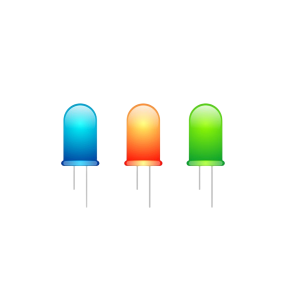
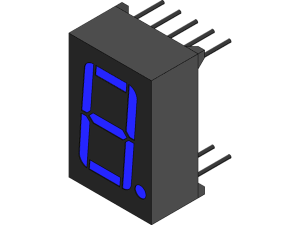
Ir LED forward voltage is a critical parameter in the design and application of infrared light-emitting diodes (IR LEDs). This article delves into the intricacies of IR LED forward voltage, its significance in the industry, and its impact on various applications. With a focus on understanding the forward voltage characteristics of IR LEDs, this comprehensive guide will help readers gain insights into this essential topic.
Introduction to IR LED Forward Voltage
The forward voltage of an IR LED refers to the voltage required to forward bias the diode, allowing it to emit infrared light. This parameter is crucial as it determines the power supply requirements and efficiency of the LED. IR LEDs are widely used in applications such as remote controls, barcode scanners, and security systems, where the ability to emit infrared light efficiently is paramount.
Understanding Forward Voltage
Forward voltage is a characteristic of semiconductor devices, including LEDs. It is the voltage across the diode when it is forward biased, meaning the anode voltage is higher than the cathode voltage. In the case of IR LEDs, the forward voltage typically ranges from 1.0 to 1.8 volts, depending on the material composition and the specific device design.
The forward voltage of an IR LED is influenced by several factors, including the semiconductor material, the doping level, and the temperature. For instance, AlGaAs (Aluminum Gallium Arsenide) LEDs typically have a higher forward voltage compared to GaAs (Gallium Arsenide) LEDs due to their higher bandgap energy.
Material Composition and Forward Voltage
The material composition of an IR LED significantly impacts its forward voltage. Different semiconductor materials have varying bandgap energies, which determine the wavelength of light emitted. The bandgap energy is inversely proportional to the forward voltage; thus, materials with higher bandgap energies emit light at shorter wavelengths and typically require higher forward voltages.
For example, GaAs LEDs emit infrared light at around 830 nm and have a forward voltage of approximately 1.2 to 1.4 volts. In contrast, AlGaAs LEDs emit light at around 940 nm and have a forward voltage of around 1.4 to 1.8 volts. By adjusting the material composition, manufacturers can tailor the forward voltage and emission wavelength of IR LEDs to meet specific application requirements.
Temperature and Forward Voltage
Temperature is another critical factor that affects the forward voltage of IR LEDs. As the temperature increases, the forward voltage of the LED decreases due to the increased thermal energy in the semiconductor material. This behavior is known as the temperature coefficient of the forward voltage.
Understanding the temperature coefficient is crucial for ensuring reliable operation of IR LEDs in various environments. Designers must consider the temperature range in which the LED will operate and ensure that the forward voltage remains within acceptable limits to maintain consistent performance.
Impact on LED Efficiency
The forward voltage also has a direct impact on the efficiency of IR LEDs. A higher forward voltage results in lower efficiency, as more electrical power is wasted as heat rather than being converted into light. Conversely, a lower forward voltage leads to higher efficiency, as more electrical power is converted into light.
Manufacturers strive to optimize the forward voltage of IR LEDs to achieve the best balance between efficiency and cost. This involves selecting appropriate materials, designing the LED structure, and considering the thermal management of the device.
Applications of IR LEDs with Forward Voltage Considerations
IR LEDs with specific forward voltage characteristics are used in a wide range of applications. Here are some examples:
– Remote Controls: IR LEDs with a forward voltage of around 1.5 to 1.8 volts are commonly used in remote controls for consumer electronics, such as TVs and air conditioners.
– Barcode Scanners: IR LEDs with a forward voltage of around 1.0 to 1.2 volts are employed in barcode scanners to read barcodes and generate signals for data processing.
– Security Systems: IR LEDs with a forward voltage of around 1.4 to 1.8 volts are used in security systems for motion detection and surveillance.
– Medical Equipment: IR LEDs with a forward voltage of around 1.0 to 1.2 volts are used in medical equipment for diagnostics and treatment, such as in thermal imaging and photodynamic therapy.
Conclusion
In conclusion, the forward voltage of IR LEDs is a critical parameter that affects their performance, efficiency, and suitability for various applications. By understanding the factors influencing forward voltage, such as material composition, temperature, and efficiency, designers and engineers can optimize IR LED performance and ensure reliable operation in a wide range of environments. As the demand for infrared technology continues to grow, the importance of mastering the intricacies of IR LED forward voltage will only increase.
 English
 Afrikaans
 Albanian
 Amharic
 Arabic
 Armenian
 Azerbaijani
 Basque
 Belarusian
 Bengali
 Bosnian
 Bulgarian
 Catalan
 Cebuano
 Chichewa
 Corsican
 Croatian
 Czech
Czech Danish
 Dutch
Dutch Esperanto
 Estonian
 Filipino
 Finnish
 French
 Frisian
 Galician
 Georgian
 German
 Greek
Greek Gujarati
 Haitian Creole
 Hausa
Hausa Hawaiian
 Hebrew
 Hindi
Hindi Hmong
Hmong Hungarian
 Icelandic
 Igbo
Igbo Indonesian
 Irish
Irish Italian
 Japanese
 Javanese
 Kannada
 Kazakh
 Khmer
Khmer Korean
 Kurdish (Kurmanji)
 Kyrgyz
 Lao
Lao Latin
Latin Latvian
 Lithuanian
 Luxembourgish
 Macedonian
 Malagasy
 Malay
Malay Malayalam
 Maltese
 Maori
Maori Marathi
 Mongolian
 Myanmar (Burmese)
 Nepali
 Norwegian
 Pashto
 Persian
 Polish
 Portuguese
 Punjabi
 Romanian
 Russian
 Samoan
 Scottish Gaelic
 Serbian
 Sesotho
 Shona
Shona Sindhi
 Sinhala
 Slovak
 Slovenian
 Somali
 Spanish
 Sudanese
 Swahili
 Swedish
 Tajik
Tajik Tamil
Tamil Telugu
 Thai
Thai Turkish
 Ukrainian
 Urdu
Urdu Uzbek
Uzbek Vietnamese
 Welsh
Welsh Xhosa
Xhosa Yiddish
 Yoruba
 Zulu
Zulu
Explore More from Queendom Lamp
Stay updated with the latest LED technology, lighting solutions, and industry insights.
Request a Quote About Queendom