

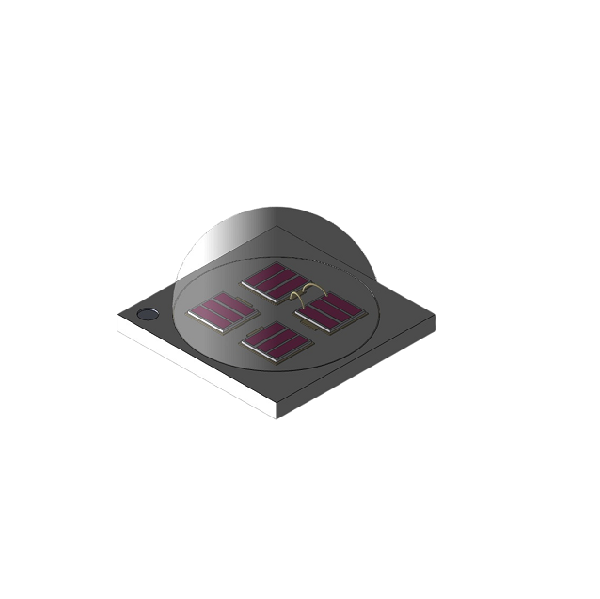
Infrared light, often referred to as heat radiation, plays a crucial role in various industries due to its unique properties and applications. This type of electromagnetic radiation has wavelengths longer than those of visible light but shorter than those of terahertz radiation. This article delves into the industry of infrared light, exploring its origins, applications, technological advancements, and future prospects.
History and Basic Principles of Infrared Light
The concept of infrared light dates back to the early 19th century when scientists began to study the spectrum of light beyond what the human eye could see. In 1800, Sir William Herschel discovered infrared radiation by accident while conducting experiments with a prism. He observed that the heat from the sun increased as the light passed through the prism, indicating the presence of a new type of radiation with longer wavelengths than visible light.
Infrared light is classified into three regions based on its wavelength: near-infrared (NIR), mid-infrared (MIR), and far-infrared (FIR). NIR has wavelengths ranging from 0.75 to 3 micrometers, MIR from 3 to 50 micrometers, and FIR from 50 to 1000 micrometers. Each region has distinct properties and applications in different industries.
Applications of Infrared Light in Various Industries
1. Agriculture: Infrared light is widely used in agriculture for plant growth, soil analysis, and disease detection. NIR technology helps farmers monitor crop health, optimize irrigation, and increase yields. MIR and FIR are used for soil moisture and temperature measurements, which are essential for efficient irrigation and fertilization.
2. Healthcare: In healthcare, infrared light is employed for diagnostic purposes, such as thermal imaging and thermography. These techniques allow medical professionals to detect abnormalities in the body, such as infections, tumors, and circulatory problems. Infrared light is also used in physical therapy to promote healing and reduce pain.
3. Security and Surveillance: Infrared light is a key component in security and surveillance systems. Thermal imaging cameras use infrared radiation to detect heat signatures, enabling the identification of individuals in low-light or dark environments. This technology is widely used in airports, border crossings, and other critical infrastructure.
4. Manufacturing: In the manufacturing industry, infrared light is used for process control, non-destructive testing, and quality assurance. NIR and MIR spectroscopy help analyze materials and products for contaminants, impurities, and other defects. FIR radiation is used for heat treatment and drying processes.
5. Automotive: In the automotive industry, infrared light is used for various applications, including night vision systems, engine diagnostics, and driver-assistance technologies. Infrared sensors are used to detect obstacles, measure distance, and control vehicle performance.
Technological Advancements in Infrared Light Technology
The development of infrared light technology has been driven by the need for more efficient and precise applications. Some of the key technological advancements include:
- Improved Detector Materials: The discovery and development of new semiconductor materials, such as indium gallium arsenide (InGaAs) and mercury cadmium telluride (MCT), have led to higher sensitivity and faster response times in infrared detectors.
- Miniaturization: Advances in microelectronics have allowed for the miniaturization of infrared devices, making them more practical for various applications, including mobile devices and wearable technology.
- Integration: The integration of infrared technology with other sensors, such as cameras and microphones, has enabled the development of multi-functional devices with enhanced capabilities.
- Software Algorithms: The development of sophisticated software algorithms has improved the performance of infrared systems, enabling better image processing, data analysis, and decision-making.
Future Prospects and Challenges
The future of infrared light technology looks promising, with ongoing research and development aimed at expanding its applications and improving its performance. Some of the key areas of focus include:
- Energy Efficiency: Developing more energy-efficient infrared devices to reduce power consumption and extend battery life.
- Cost Reduction: Finding ways to reduce the cost of infrared technology to make it more accessible to a wider range of applications and users.
- Environmental Impact: Addressing the environmental challenges associated with the production and disposal of infrared devices.
- New Applications: Exploring new applications for infrared light in emerging fields, such as quantum computing and space exploration.
Despite the promising future, there are challenges that need to be addressed, including the development of more advanced materials, the miniaturization of complex systems, and the integration of infrared technology with other emerging technologies.
In conclusion, infrared light has become an indispensable part of modern industry, offering a wide range of applications and technological advancements. As research and development continue to progress, the potential for infrared light to revolutionize various sectors is immense.
 English
 Afrikaans
 Albanian
 Amharic
 Arabic
 Armenian
 Azerbaijani
 Basque
 Belarusian
 Bengali
 Bosnian
 Bulgarian
 Catalan
 Cebuano
 Chichewa
 Corsican
 Croatian
 Czech
Czech Danish
 Dutch
Dutch Esperanto
 Estonian
 Filipino
 Finnish
 French
 Frisian
 Galician
 Georgian
 German
 Greek
Greek Gujarati
 Haitian Creole
 Hausa
Hausa Hawaiian
 Hebrew
 Hindi
Hindi Hmong
Hmong Hungarian
 Icelandic
 Igbo
Igbo Indonesian
 Irish
Irish Italian
 Japanese
 Javanese
 Kannada
 Kazakh
 Khmer
Khmer Korean
 Kurdish (Kurmanji)
 Kyrgyz
 Lao
Lao Latin
Latin Latvian
 Lithuanian
 Luxembourgish
 Macedonian
 Malagasy
 Malay
Malay Malayalam
 Maltese
 Maori
Maori Marathi
 Mongolian
 Myanmar (Burmese)
 Nepali
 Norwegian
 Pashto
 Persian
 Polish
 Portuguese
 Punjabi
 Romanian
 Russian
 Samoan
 Scottish Gaelic
 Serbian
 Sesotho
 Shona
Shona Sindhi
 Sinhala
 Slovak
 Slovenian
 Somali
 Spanish
 Sudanese
 Swahili
 Swedish
 Tajik
Tajik Tamil
Tamil Telugu
 Thai
Thai Turkish
 Ukrainian
 Urdu
Urdu Uzbek
Uzbek Vietnamese
 Welsh
Welsh Xhosa
Xhosa Yiddish
 Yoruba
 Zulu
Zulu
Explore More from Queendom Lamp
Stay updated with the latest LED technology, lighting solutions, and industry insights.
Request a Quote About Queendom