




Introduction
The infrared 940nm lamp, also known as an infrared LED, has become an indispensable component in various industries due to its excellent performance and wide range of applications. This article aims to provide an in-depth introduction to the infrared 940nm lamp, covering its working principle, applications, advantages, and market trends.
Working Principle of Infrared 940nm Lamp
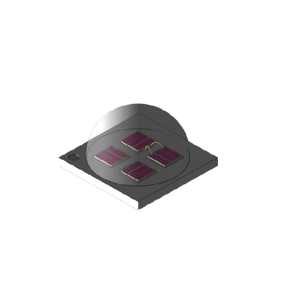
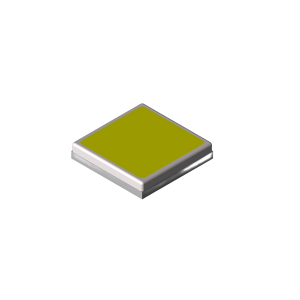
An infrared 940nm lamp is a semiconductor device that emits infrared light at a wavelength of 940nm. It is composed of a p-n junction, where electrons and holes recombine, releasing energy in the form of infrared light. The 940nm wavelength falls within the near-infrared spectrum, which is invisible to the human eye but can be detected by various sensors and devices.
The working principle of an infrared 940nm lamp is based on the photoelectric effect. When the p-n junction is forward-biased, electrons are injected into the conduction band, and holes are injected into the valence band. As these electrons and holes recombine, they release energy in the form of photons. The wavelength of these photons is determined by the energy gap between the conduction band and the valence band in the semiconductor material.
Applications of Infrared 940nm Lamp
The infrared 940nm lamp has found numerous applications across various industries, including:
1. Remote Control Devices: Infrared 940nm lamps are commonly used in remote control devices, such as TVs, air conditioners, and other home appliances. They enable wireless communication between the device and the remote control, allowing users to control the device from a distance.
2. Biometric Identification: The infrared 940nm lamp is widely used in biometric identification systems, such as fingerprint scanners and facial recognition systems. The near-infrared light helps in capturing the unique features of an individual’s fingerprint or face, enabling accurate identification.
3. Infrared Sensors: Infrared 940nm lamps are used as light sources in various types of infrared sensors, such as motion sensors, proximity sensors, and temperature sensors. These sensors detect changes in the infrared radiation, allowing for applications like automatic lighting, security systems, and environmental monitoring.
4. Medical Equipment: Infrared 940nm lamps are used in medical equipment for various purposes, such as thermotherapy, phototherapy, and photodynamic therapy. These lamps emit near-infrared light that can penetrate the skin and interact with tissues, promoting healing and reducing pain.
5. Industrial Automation: The infrared 940nm lamp is used in industrial automation systems for machine vision, barcode scanning, and quality control. It helps in detecting and analyzing objects and patterns, ensuring efficient and accurate production processes.
Advantages of Infrared 940nm Lamp
The infrared 940nm lamp offers several advantages over other types of light sources:
1. High Efficiency: Infrared 940nm lamps have a high conversion efficiency, converting a significant portion of electrical energy into infrared light.
2. Long Life: These lamps have a long lifespan, typically ranging from 50,000 to 100,000 hours, reducing maintenance and replacement costs.
3. Compact Size: Infrared 940nm lamps are compact and lightweight, making them suitable for integration into various devices and systems.
4. Low Power Consumption: These lamps consume low power, contributing to energy savings and reducing the overall operational cost.
5. Environmental Friendly: Infrared 940nm lamps are free of harmful substances like mercury, making them environmentally friendly.
Market Trends
The market for infrared 940nm lamps has been witnessing steady growth, driven by the increasing demand in various industries. The following trends are shaping the market:
1. Integration with IoT: The integration of infrared 940nm lamps with the Internet of Things (IoT) is expected to create new opportunities for applications in smart homes, smart cities, and industrial automation.
2. Miniaturization: There is a growing trend towards miniaturizing infrared 940nm lamps, making them suitable for smaller and more compact devices.
3. Customization: Manufacturers are focusing on providing customized solutions to meet the specific requirements of different applications, enhancing the competitiveness of the market.
4. Energy Efficiency: As environmental concerns continue to rise, there is a growing emphasis on energy-efficient infrared 940nm lamps, which are expected to dominate the market in the coming years.
In conclusion, the infrared 940nm lamp has become an essential component in various industries due to its excellent performance and wide range of applications. With the continuous development of technology and market trends, the infrared 940nm lamp market is expected to grow further in the future.
 English
 Afrikaans
 Albanian
 Amharic
 Arabic
 Armenian
 Azerbaijani
 Basque
 Belarusian
 Bengali
 Bosnian
 Bulgarian
 Catalan
 Cebuano
 Chichewa
 Corsican
 Croatian
 Czech
Czech Danish
 Dutch
Dutch Esperanto
 Estonian
 Filipino
 Finnish
 French
 Frisian
 Galician
 Georgian
 German
 Greek
Greek Gujarati
 Haitian Creole
 Hausa
Hausa Hawaiian
 Hebrew
 Hindi
Hindi Hmong
Hmong Hungarian
 Icelandic
 Igbo
Igbo Indonesian
 Irish
Irish Italian
 Japanese
 Javanese
 Kannada
 Kazakh
 Khmer
Khmer Korean
 Kurdish (Kurmanji)
 Kyrgyz
 Lao
Lao Latin
Latin Latvian
 Lithuanian
 Luxembourgish
 Macedonian
 Malagasy
 Malay
Malay Malayalam
 Maltese
 Maori
Maori Marathi
 Mongolian
 Myanmar (Burmese)
 Nepali
 Norwegian
 Pashto
 Persian
 Polish
 Portuguese
 Punjabi
 Romanian
 Russian
 Samoan
 Scottish Gaelic
 Serbian
 Sesotho
 Shona
Shona Sindhi
 Sinhala
 Slovak
 Slovenian
 Somali
 Spanish
 Sudanese
 Swahili
 Swedish
 Tajik
Tajik Tamil
Tamil Telugu
 Thai
Thai Turkish
 Ukrainian
 Urdu
Urdu Uzbek
Uzbek Vietnamese
 Welsh
Welsh Xhosa
Xhosa Yiddish
 Yoruba
 Zulu
Zulu
Explore More from Queendom Lamp
Stay updated with the latest LED technology, lighting solutions, and industry insights.
Request a Quote About Queendom