






Surface mount RGB LED, also known as an SMD RGB LED, has become a staple in the electronics industry due to its compact size, versatility, and vibrant color display capabilities. This article delves into the world of surface mount RGB LEDs, exploring their history, technology, applications, and the future trends in this rapidly evolving field.
Introduction to Surface Mount RGB LED
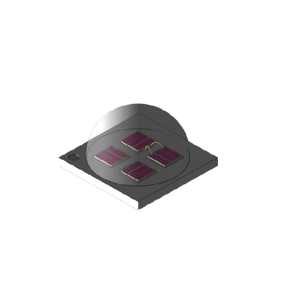
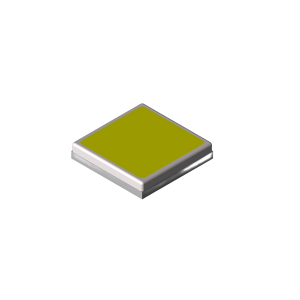
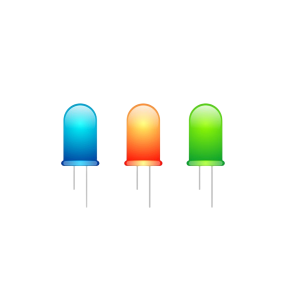
Surface mount RGB LEDs are a type of light-emitting diode (LED) that is mounted directly onto a printed circuit board (PCB) using surface mount technology (SMT). Unlike traditional through-hole LEDs, SMD RGB LEDs offer a smaller form factor, which is ideal for applications where space is at a premium. The RGB in the name stands for Red, Green, and Blue, the three primary colors that can be mixed to produce a wide range of colors.
History and Development
The concept of surface mount technology originated in the 1960s, but it wasn’t until the late 1970s that surface mount components started to gain traction in the electronics industry. The first surface mount RGB LEDs were developed in the early 1980s, and since then, they have undergone significant advancements in terms of efficiency, color quality, and durability.
Technology and Working Principle
Surface mount RGB LEDs consist of three separate diodes, each emitting light in one of the primary colors. These diodes are mounted on a single die, which is then attached to the PCB. The die is typically made of a sapphire or silicon substrate, and the individual diodes are created using a process called epitaxy, which involves depositing layers of semiconductor materials.
When an electrical current is applied to the diodes, they emit light. The intensity of the light emitted by each diode can be controlled independently, allowing for the creation of a wide spectrum of colors. This is achieved through a technique called pulse-width modulation (PWM), which varies the width of the electrical pulses to adjust the brightness of each color channel.
Applications
Surface mount RGB LEDs find applications in a variety of industries and products. Some of the most common uses include:
– Consumer Electronics: Smartphones, tablets, computers, and gaming consoles often incorporate RGB LEDs for status indicators, keyboard lighting, and decorative purposes.
– Automotive: RGB LEDs are used in car interiors for ambient lighting, instrument panel displays, and decorative elements.
– Home Automation: Smart home devices, such as LED strip lights and smart bulbs, utilize RGB LEDs to provide customizable lighting solutions.
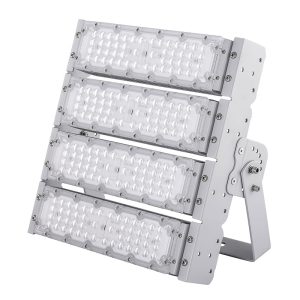
– Advertising and Signage: RGB LEDs are commonly used in digital billboards and signage for vibrant and eye-catching displays.
– Fashion and Wearables: RGB LEDs are integrated into clothing and accessories for decorative lighting effects and interactive wearables.
Advantages of Surface Mount RGB LEDs
There are several advantages to using surface mount RGB LEDs over traditional through-hole LEDs:
– Compact Size: SMD RGB LEDs are significantly smaller, allowing for more compact and lightweight designs.
– Heat Dissipation: The smaller size and direct attachment to the PCB enhance heat dissipation, making them suitable for high-temperature environments.
– Durability: The absence of leads reduces the risk of mechanical damage, and the direct mount to the PCB ensures a robust connection.
– Cost-Effective: Mass production of SMD RGB LEDs is more cost-effective due to the simplified assembly process.
Challenges and Limitations
Despite their numerous benefits, surface mount RGB LEDs face some challenges and limitations:
– Light Spreading: The small size of SMD RGB LEDs can lead to less efficient light spreading, which might affect the overall brightness and uniformity of the light output.
– Color Accuracy: Achieving precise color accuracy can be challenging, especially when mixing the three primary colors.
– Power Consumption: High-power RGB LEDs can consume a significant amount of power, which might be a concern in battery-powered devices.
Future Trends
The future of surface mount RGB LEDs looks promising, with several trends expected to shape the industry:
– High-Performance Materials: Ongoing research is focused on developing high-performance materials that can enhance the efficiency and longevity of RGB LEDs.
– Smart Lighting Solutions: Integration with smart home ecosystems and IoT (Internet of Things) devices is expected to increase, allowing for dynamic and interactive lighting experiences.
– Customization and Personalization: The ability to produce RGB LEDs with specific color characteristics and patterns will continue to grow, catering to niche markets and individual preferences.
In conclusion, surface mount RGB LEDs have revolutionized the lighting industry with their compact size, versatility, and vibrant color display capabilities. As technology advances, these LEDs are poised to play an even more significant role in a wide range of applications, offering new possibilities for innovation and customization.
 English
 Afrikaans
 Albanian
 Amharic
 Arabic
 Armenian
 Azerbaijani
 Basque
 Belarusian
 Bengali
 Bosnian
 Bulgarian
 Catalan
 Cebuano
 Chichewa
 Corsican
 Croatian
 Czech
Czech Danish
 Dutch
Dutch Esperanto
 Estonian
 Filipino
 Finnish
 French
 Frisian
 Galician
 Georgian
 German
 Greek
Greek Gujarati
 Haitian Creole
 Hausa
Hausa Hawaiian
 Hebrew
 Hindi
Hindi Hmong
Hmong Hungarian
 Icelandic
 Igbo
Igbo Indonesian
 Irish
Irish Italian
 Japanese
 Javanese
 Kannada
 Kazakh
 Khmer
Khmer Korean
 Kurdish (Kurmanji)
 Kyrgyz
 Lao
Lao Latin
Latin Latvian
 Lithuanian
 Luxembourgish
 Macedonian
 Malagasy
 Malay
Malay Malayalam
 Maltese
 Maori
Maori Marathi
 Mongolian
 Myanmar (Burmese)
 Nepali
 Norwegian
 Pashto
 Persian
 Polish
 Portuguese
 Punjabi
 Romanian
 Russian
 Samoan
 Scottish Gaelic
 Serbian
 Sesotho
 Shona
Shona Sindhi
 Sinhala
 Slovak
 Slovenian
 Somali
 Spanish
 Sudanese
 Swahili
 Swedish
 Tajik
Tajik Tamil
Tamil Telugu
 Thai
Thai Turkish
 Ukrainian
 Urdu
Urdu Uzbek
Uzbek Vietnamese
 Welsh
Welsh Xhosa
Xhosa Yiddish
 Yoruba
 Zulu
Zulu
Explore More from Queendom Lamp
Stay updated with the latest LED technology, lighting solutions, and industry insights.
Request a Quote About Queendom