

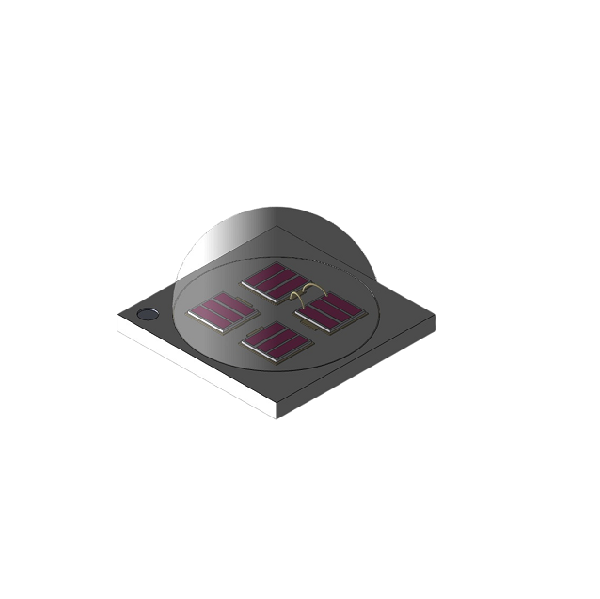
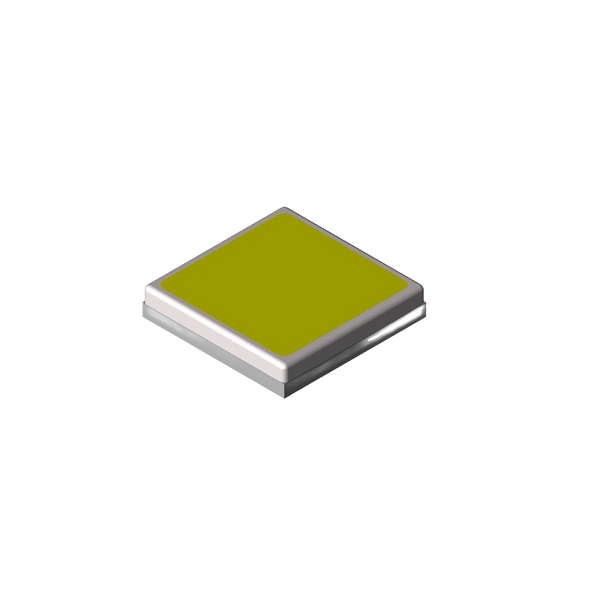

Far infrared light emitting diode (FIR LED) technology has emerged as a significant breakthrough in the field of infrared lighting and sensing. As a specialized type of LED, FIR LEDs emit light in the far infrared spectrum, which is beyond the visible light range. This technology finds extensive applications in various industries, including medical, industrial, agricultural, and consumer electronics. This article aims to provide a comprehensive introduction to FIR LED technology, covering its working principles, applications, advantages, challenges, and future prospects.
Working Principles of FIR LEDs
FIR LEDs operate on the principle of electroluminescence, similar to other types of LEDs. When a current is applied to the diode, electrons and holes recombine at the p-n junction, releasing energy in the form of photons. In FIR LEDs, the materials used for the semiconductor layers are designed to emit light in the far infrared region of the electromagnetic spectrum, typically between 7.5 µm and 15 µm.
The key to achieving FIR emission lies in the choice of semiconductor materials. Materials with a wider bandgap are more effective at emitting FIR light. Commonly used materials include gallium arsenide (GaAs), gallium antimonide (GaSb), and indium antimonide (InSb). These materials are doped with impurities to create the p-n junction, which facilitates the recombination of electrons and holes and the emission of FIR photons.
Applications of FIR LEDs
The unique properties of FIR LEDs make them suitable for a wide range of applications:
1. Thermal imaging: FIR LEDs are used in thermal imaging cameras to detect and visualize heat sources. This technology finds applications in security, search and rescue operations, and building inspection.
2. Medical diagnostics: FIR LEDs are employed in medical devices for various diagnostic purposes, such as detecting skin abnormalities, measuring tissue temperature, and monitoring blood flow. This technology has the potential to improve patient care and early disease detection.
3. Industrial automation: FIR LEDs are used in industrial applications for machine vision, process control, and quality inspection. Their ability to detect subtle temperature variations makes them ideal for identifying defects in materials and products.
4. Agricultural applications: FIR LEDs are used in agricultural settings for plant growth promotion, pest control, and soil monitoring. FIR light can stimulate plant growth, enhance photosynthesis, and improve crop yield.
5. Consumer electronics: FIR LEDs are used in consumer products such as remote controls, IR sensors, and night vision devices. Their ability to emit light in the infrared spectrum makes them suitable for applications where visible light is undesirable or unavailable.
Advantages of FIR LEDs
FIR LEDs offer several advantages over traditional infrared sources, such as:
1. Energy efficiency: FIR LEDs consume less power compared to other infrared sources, making them more energy-efficient.
2. Compact size: FIR LEDs are compact and lightweight, which allows for easy integration into various devices and systems.
3. Long lifespan: FIR LEDs have a longer lifespan compared to traditional infrared sources, reducing maintenance and replacement costs.
4. Wide range of applications: FIR LEDs can be used in various industries, providing a versatile solution for different needs.
5. Cost-effectiveness: With advancements in manufacturing processes, FIR LEDs have become more cost-effective, making them accessible to a broader market.
Challenges and Future Prospects
Despite their numerous advantages, FIR LED technology faces several challenges:
1. Material limitations: The availability and cost of suitable semiconductor materials for FIR LEDs can be a limiting factor.
2. Thermal management: FIR LEDs generate heat during operation, which requires effective thermal management to prevent overheating and ensure device reliability.
3. Efficiency: Although FIR LEDs are more energy-efficient than traditional infrared sources, there is still room for improvement in terms of efficiency.
4. Cost: Although FIR LEDs have become more cost-effective, they are still more expensive than some traditional infrared sources, which can be a barrier to widespread adoption.
Looking ahead, the future of FIR LED technology is promising. Ongoing research and development efforts are focused on overcoming the challenges mentioned above. Advancements in material science, thermal management techniques, and manufacturing processes are expected to drive the cost down and improve the efficiency of FIR LEDs. As a result, we can anticipate a broader range of applications and increased market adoption in the coming years.
In conclusion, FIR LED technology has made significant strides in recent years, offering a versatile and efficient solution for various applications. With ongoing advancements and the potential for further innovation, FIR LEDs are poised to play a crucial role in shaping the future of infrared technology.
 English
 Afrikaans
 Albanian
 Amharic
 Arabic
 Armenian
 Azerbaijani
 Basque
 Belarusian
 Bengali
 Bosnian
 Bulgarian
 Catalan
 Cebuano
 Chichewa
 Corsican
 Croatian
 Czech
Czech Danish
 Dutch
Dutch Esperanto
 Estonian
 Filipino
 Finnish
 French
 Frisian
 Galician
 Georgian
 German
 Greek
Greek Gujarati
 Haitian Creole
 Hausa
Hausa Hawaiian
 Hebrew
 Hindi
Hindi Hmong
Hmong Hungarian
 Icelandic
 Igbo
Igbo Indonesian
 Irish
Irish Italian
 Japanese
 Javanese
 Kannada
 Kazakh
 Khmer
Khmer Korean
 Kurdish (Kurmanji)
 Kyrgyz
 Lao
Lao Latin
Latin Latvian
 Lithuanian
 Luxembourgish
 Macedonian
 Malagasy
 Malay
Malay Malayalam
 Maltese
 Maori
Maori Marathi
 Mongolian
 Myanmar (Burmese)
 Nepali
 Norwegian
 Pashto
 Persian
 Polish
 Portuguese
 Punjabi
 Romanian
 Russian
 Samoan
 Scottish Gaelic
 Serbian
 Sesotho
 Shona
Shona Sindhi
 Sinhala
 Slovak
 Slovenian
 Somali
 Spanish
 Sudanese
 Swahili
 Swedish
 Tajik
Tajik Tamil
Tamil Telugu
 Thai
Thai Turkish
 Ukrainian
 Urdu
Urdu Uzbek
Uzbek Vietnamese
 Welsh
Welsh Xhosa
Xhosa Yiddish
 Yoruba
 Zulu
Zulu
Explore More from Queendom Lamp
Stay updated with the latest LED technology, lighting solutions, and industry insights.
Request a Quote About Queendom