



With the rapid development of technology, 275nm UV LED has emerged as a cutting-edge lighting solution that offers numerous advantages over traditional UV lamps. This article delves into the industry of 275nm UV LED, exploring its applications, technology, market trends, and future prospects.
Introduction to 275nm UV LED
The 275nm UV LED, also known as deep UV LED, operates at a shorter wavelength than conventional UV LEDs, which typically emit light at 365nm or 395nm. This shorter wavelength allows for deeper penetration into materials, making it ideal for various applications that require precise and intense UV radiation. The 275nm UV LED emits light at a frequency that is more energetic, which enables it to break down organic compounds and sterilize surfaces more effectively.
Applications of 275nm UV LED
The applications of 275nm UV LED are diverse and include but are not limited to the following areas:
1. Water Treatment: 275nm UV LED can effectively degrade organic contaminants in water, making it a promising technology for water purification and disinfection.
2. Surface Sterilization: In healthcare, food processing, and other industries, 275nm UV LED can be used to sterilize surfaces and equipment, reducing the risk of contamination.
3. Ozone Generation: The high-energy photons emitted by 275nm UV LED can split oxygen molecules, generating ozone, which is a powerful disinfectant.
4. Material Processing: The intense UV radiation can initiate photochemical reactions, which are essential in various material processing applications, such as curing inks and adhesives.
5. Microscopy and Imaging: 275nm UV LED can be used in scientific research for high-resolution imaging and analysis of samples.
Technology Behind 275nm UV LED
The development of 275nm UV LED technology involves overcoming several challenges. These include the production of high-quality gallium nitride (GaN) substrates, which are essential for the fabrication of UV LEDs, and the development of efficient UV emitting materials. Here are some key aspects of the technology:
1. GaN Substrates: The quality of the GaN substrate is crucial for the performance of UV LEDs. High-quality substrates with low defect density and good crystal quality are required to achieve high efficiency and reliability.
2. UV Emitting Materials: The choice of UV emitting materials is critical for the efficiency and stability of the LED. Researchers have been exploring various materials, such as aluminum gallium nitride (AlGaN) and zinc gallium nitride (ZnGaN), to achieve the desired emission characteristics.
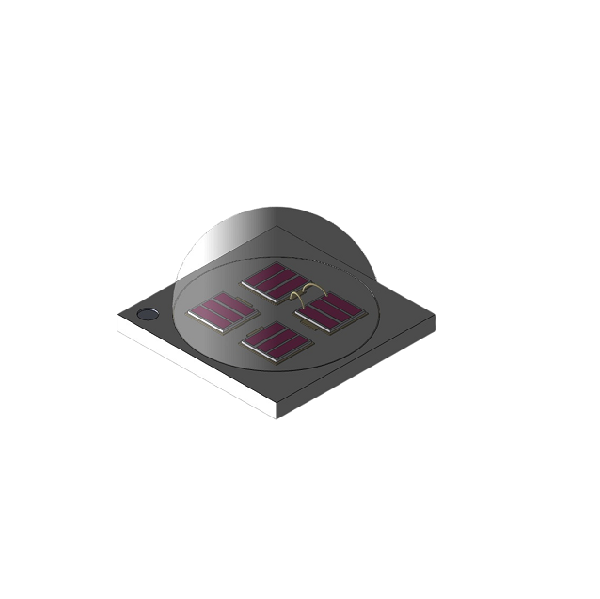
3. Optical Design: The optical design of the LED package plays a significant role in extracting light and ensuring efficient operation. Techniques such as microlens arrays and antireflective coatings are used to enhance light extraction and reduce light loss.
Market Trends
The market for 275nm UV LED is experiencing steady growth, driven by increasing demand in various industries. Here are some key market trends:
1. Regulatory Support: Governments around the world are implementing regulations that promote the use of UV LED technology for water treatment and sterilization, which is expected to drive market growth.
2. Technological Advancements: Continuous technological improvements in UV LED efficiency and lifespan are making the technology more attractive to end-users.
3. Competitive Pricing: As the industry matures, the cost of 275nm UV LED is expected to decrease, making it more accessible to a wider range of applications.
Future Prospects
The future of the 275nm UV LED industry looks promising, with several potential growth areas:
1. Expansion into New Markets: The technology has the potential to expand into new markets, such as air purification and semiconductor manufacturing.
2. Innovation in Materials and Design: Ongoing research and development efforts are expected to lead to further improvements in UV LED performance and efficiency.
3. Collaboration and Partnerships: Collaboration between industry players and research institutions can accelerate the development and adoption of 275nm UV LED technology.
In conclusion, the 275nm UV LED industry is poised for significant growth, driven by its versatility, efficiency, and environmental benefits. As technology continues to advance and market demand increases, the potential applications of 275nm UV LED will expand, making it an indispensable tool in various industries.


Explore More from Queendom Lamp
Stay updated with the latest LED technology, lighting solutions, and industry insights.
Request a Quote About Queendom