

7-Segment Display: A Timeless Technology in Modern Electronics
Introduction to 7-Segment Display
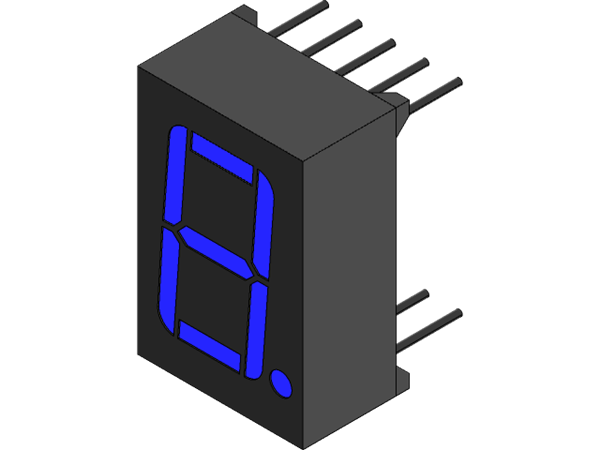
The 7-Segment Display is a fundamental component in the field of electronics, serving as a key element in displaying numerical and alphanumeric information. It consists of seven individual segments that can be turned on or off to represent different characters. Despite its simplicity, the 7-Segment Display has been a cornerstone in various applications, from basic calculators to complex industrial systems.
History and Evolution
The concept of the 7-Segment Display originated in the early 20th century, with its first patent filed in 1908. However, it wasn’t until the mid-20th century that the technology gained widespread recognition and adoption. The 7-Segment Display has evolved significantly over the years, with improvements in materials, manufacturing processes, and integration with modern electronics.
Components of a 7-Segment Display
A typical 7-Segment Display is composed of seven vertical segments, each capable of being illuminated or turned off. These segments are arranged in a specific pattern to form the digits 0-9 and some alphanumeric characters. In addition to the seven segments, a 7-Segment Display may also include a decimal point for displaying decimal numbers.
Types of 7-Segment Displays
There are several types of 7-Segment Displays, each with its own set of characteristics and applications. The most common types include:
– Common Anode 7-Segment Display: In this type, the segments are connected to the positive voltage, and the common cathode pin is grounded. To turn on a segment, the corresponding cathode is grounded, while the anode remains at the positive voltage.
– Common Cathode 7-Segment Display: This type is the opposite of the common anode, where the segments are connected to the negative voltage, and the common anode pin is grounded. To turn on a segment, the corresponding anode is grounded, while the cathode remains at the negative voltage.
– Alphanumeric 7-Segment Display: These displays have additional segments to represent letters and symbols, allowing for the display of more complex information.
– Bi-Color 7-Segment Display: These displays have two sets of segments, one for each color, allowing for the display of multiple colors simultaneously.
Applications of 7-Segment Displays
The versatility of the 7-Segment Display has made it a popular choice for various applications across different industries. Some of the most common uses include:
– Consumer Electronics: 7-Segment Displays are commonly found in calculators, digital clocks, and microwave ovens.
– Automotive Industry: They are used in odometers, speedometers, and other dashboard displays in vehicles.
– Industrial Applications: 7-Segment Displays are used in industrial equipment for displaying process parameters, alarm messages, and status indicators.
– Medical Devices: They are employed in medical devices for displaying patient data, test results, and settings.
– Home Appliances: From washing machines to refrigerators, 7-Segment Displays are used for displaying operational information and settings.
Design and Implementation
Designing and implementing a 7-Segment Display involves careful consideration of the following factors:
– Size and Shape: The physical dimensions and shape of the display should be suitable for the intended application.
– Segment Arrangement: The arrangement of the segments should facilitate easy interpretation of the displayed information.
– Contrast and Visibility: The display should have sufficient contrast and visibility, even in low-light conditions.
– Power Consumption: The power requirements of the display should be optimized for the target application, ensuring efficient energy usage.
Advantages and Disadvantages
While the 7-Segment Display is a reliable and widely used technology, it has its own set of advantages and disadvantages:
– Advantages:
– Low cost and easy availability.
– High visibility and readability.
– Wide range of applications.
– Good contrast and visibility.
– Disadvantages:
– Limited character set.
– Limited color options.
– Susceptible to electrical noise and electromagnetic interference.
– Limited display resolution.
Future Trends
The 7-Segment Display continues to evolve, with new technologies and advancements being introduced. Some of the future trends include:
– LED and OLED Displays: The use of Light Emitting Diode (LED) and Organic Light Emitting Diode (OLED) technologies is expected to improve the brightness, contrast, and energy efficiency of 7-Segment Displays.
– Smart and Flexible Displays: The integration of smart materials and flexible display technologies could lead to more versatile and adaptable 7-Segment Displays.
– Customization and Personalization: As technology advances, there may be a growing demand for customized and personalized 7-Segment Displays, catering to specific application requirements.
Conclusion
The 7-Segment Display remains a vital component in the world of electronics, offering a simple yet effective solution for displaying numerical and alphanumeric information. With its long history and continuous evolution, the 7-Segment Display is poised to remain a popular choice for a wide range of applications in the years to come.
 English
 Afrikaans
 Albanian
 Amharic
 Arabic
 Armenian
 Azerbaijani
 Basque
 Belarusian
 Bengali
 Bosnian
 Bulgarian
 Catalan
 Cebuano
 Chichewa
 Corsican
 Croatian
 Czech
Czech Danish
 Dutch
Dutch Esperanto
 Estonian
 Filipino
 Finnish
 French
 Frisian
 Galician
 Georgian
 German
 Greek
Greek Gujarati
 Haitian Creole
 Hausa
Hausa Hawaiian
 Hebrew
 Hindi
Hindi Hmong
Hmong Hungarian
 Icelandic
 Igbo
Igbo Indonesian
 Irish
Irish Italian
 Japanese
 Javanese
 Kannada
 Kazakh
 Khmer
Khmer Korean
 Kurdish (Kurmanji)
 Kyrgyz
 Lao
Lao Latin
Latin Latvian
 Lithuanian
 Luxembourgish
 Macedonian
 Malagasy
 Malay
Malay Malayalam
 Maltese
 Maori
Maori Marathi
 Mongolian
 Myanmar (Burmese)
 Nepali
 Norwegian
 Pashto
 Persian
 Polish
 Portuguese
 Punjabi
 Romanian
 Russian
 Samoan
 Scottish Gaelic
 Serbian
 Sesotho
 Shona
Shona Sindhi
 Sinhala
 Slovak
 Slovenian
 Somali
 Spanish
 Sudanese
 Swahili
 Swedish
 Tajik
Tajik Tamil
Tamil Telugu
 Thai
Thai Turkish
 Ukrainian
 Urdu
Urdu Uzbek
Uzbek Vietnamese
 Welsh
Welsh Xhosa
Xhosa Yiddish
 Yoruba
 Zulu
Zulu
Explore More from Queendom Lamp
Stay updated with the latest LED technology, lighting solutions, and industry insights.
Request a Quote About Queendom