



850nm infrared light, a portion of the electromagnetic spectrum that falls within the near-infrared region, has gained significant attention in various industries due to its unique properties and applications. This wavelength of light is particularly interesting because it offers a balance between deep tissue penetration and reduced risk of thermal damage compared to shorter wavelengths. In this article, we will explore the uses, technology, and future prospects of 850nm infrared light in the industry.
Introduction to 850nm Infrared Light
850nm infrared light is a part of the infrared spectrum that is just beyond the visible light range. It is considered near-infrared because it is close to the red end of the visible spectrum. This specific wavelength is often used in applications where deep tissue penetration is required without causing significant damage to the surrounding tissue. The 850nm range is particularly attractive because it allows for a good balance between penetration depth and the ability to use optical fibers for transmission.
Applications in Medicine
One of the most prominent applications of 850nm infrared light is in medical diagnostics and therapy. The wavelength is well-suited for various medical devices, including optical coherence tomography (OCT) systems, which are used to visualize biological tissues in real-time. OCT systems using 850nm light can provide high-resolution images of the retina, which is crucial for diagnosing eye diseases such as macular degeneration and glaucoma.
In addition to OCT, 850nm infrared light is used in laser therapy for treating various conditions. The wavelength is absorbed by hemoglobin, which is a protein found in red blood cells. This absorption leads to increased blood flow and oxygenation, which can help in wound healing, reducing inflammation, and pain management. Laser therapy using 850nm light is also being explored for its potential in treating cancer, as it can target tumor cells while minimizing damage to healthy tissue.
Telecommunications and Fiber Optics
The 850nm infrared light is also widely used in telecommunications and fiber optics. This wavelength is commonly used in optical communication systems due to its compatibility with existing fiber optic cables and its low attenuation over long distances. The use of 850nm light in fiber optics allows for high-speed data transmission, which is essential for modern communication networks.
Furthermore, the 850nm range is preferred for wavelength division multiplexing (WDM) systems, where multiple signals are combined and transmitted over a single fiber. The low attenuation and good signal-to-noise ratio make 850nm light an ideal choice for such applications. The use of 850nm infrared light in fiber optics has contributed significantly to the development of high-capacity, long-distance communication networks.
Security and Defense
In the field of security and defense, 850nm infrared light finds applications in night vision devices and surveillance systems. The wavelength is well-suited for night vision technologies because it allows for the detection of thermal radiation emitted by objects, even in complete darkness. This capability is crucial for military operations and security monitoring.
Additionally, the 850nm range is used in laser rangefinders and target acquisition systems. These systems use the infrared light to measure distances and identify targets, which is essential for precision-guided weapons and tactical operations.
Environmental Monitoring
850nm infrared light is also utilized in environmental monitoring and remote sensing applications. The wavelength is absorbed by various gases and particles in the atmosphere, which allows for the detection of pollutants and other environmental hazards. This technology is vital for monitoring air quality, tracking climate change, and assessing the health of ecosystems.
Moreover, 850nm infrared light is used in agricultural applications to monitor plant health and soil conditions. The wavelength can be used to detect nutrient deficiencies, water stress, and other factors that affect crop growth. This information can help farmers make informed decisions to optimize yields and reduce environmental impact.
Technology and Innovation
The development of 850nm infrared light technology has been driven by continuous innovation in the fields of photonics, optoelectronics, and materials science. Advances in laser technology have made it possible to generate and manipulate 850nm light with high precision. Similarly, improvements in fiber optic materials and manufacturing processes have enhanced the efficiency and reliability of 850nm light transmission.
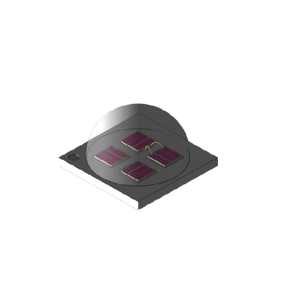
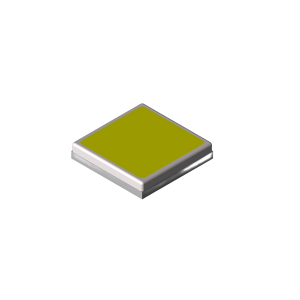
Recent technological breakthroughs include the development of novel photodetectors and light sources that operate at 850nm. These advancements have expanded the scope of applications for 850nm infrared light and have paved the way for new innovations in various industries.
Future Prospects
The future of 850nm infrared light in the industry looks promising, with ongoing research and development aimed at further enhancing its capabilities. As technology continues to advance, we can expect to see increased applications in areas such as advanced medical diagnostics, high-speed data communication, and environmental monitoring.
In particular, the integration of 850nm infrared light with artificial intelligence and machine learning algorithms could lead to groundbreaking advancements in fields like healthcare and environmental science. The ability to process and analyze vast amounts of data generated by 850nm-based systems will open new avenues for research and discovery.
In conclusion, 850nm infrared light has emerged as a versatile and powerful tool in various industries. Its unique properties make it an essential component of cutting-edge technologies, from medical diagnostics to environmental monitoring. As research and development continue to push the boundaries of what is possible with this wavelength of light, the future of 850nm infrared light is bright and full of potential.
 English
 Afrikaans
 Albanian
 Amharic
 Arabic
 Armenian
 Azerbaijani
 Basque
 Belarusian
 Bengali
 Bosnian
 Bulgarian
 Catalan
 Cebuano
 Chichewa
 Corsican
 Croatian
 Czech
Czech Danish
 Dutch
Dutch Esperanto
 Estonian
 Filipino
 Finnish
 French
 Frisian
 Galician
 Georgian
 German
 Greek
Greek Gujarati
 Haitian Creole
 Hausa
Hausa Hawaiian
 Hebrew
 Hindi
Hindi Hmong
Hmong Hungarian
 Icelandic
 Igbo
Igbo Indonesian
 Irish
Irish Italian
 Japanese
 Javanese
 Kannada
 Kazakh
 Khmer
Khmer Korean
 Kurdish (Kurmanji)
 Kyrgyz
 Lao
Lao Latin
Latin Latvian
 Lithuanian
 Luxembourgish
 Macedonian
 Malagasy
 Malay
Malay Malayalam
 Maltese
 Maori
Maori Marathi
 Mongolian
 Myanmar (Burmese)
 Nepali
 Norwegian
 Pashto
 Persian
 Polish
 Portuguese
 Punjabi
 Romanian
 Russian
 Samoan
 Scottish Gaelic
 Serbian
 Sesotho
 Shona
Shona Sindhi
 Sinhala
 Slovak
 Slovenian
 Somali
 Spanish
 Sudanese
 Swahili
 Swedish
 Tajik
Tajik Tamil
Tamil Telugu
 Thai
Thai Turkish
 Ukrainian
 Urdu
Urdu Uzbek
Uzbek Vietnamese
 Welsh
Welsh Xhosa
Xhosa Yiddish
 Yoruba
 Zulu
Zulu
Explore More from Queendom Lamp
Stay updated with the latest LED technology, lighting solutions, and industry insights.
Request a Quote About Queendom